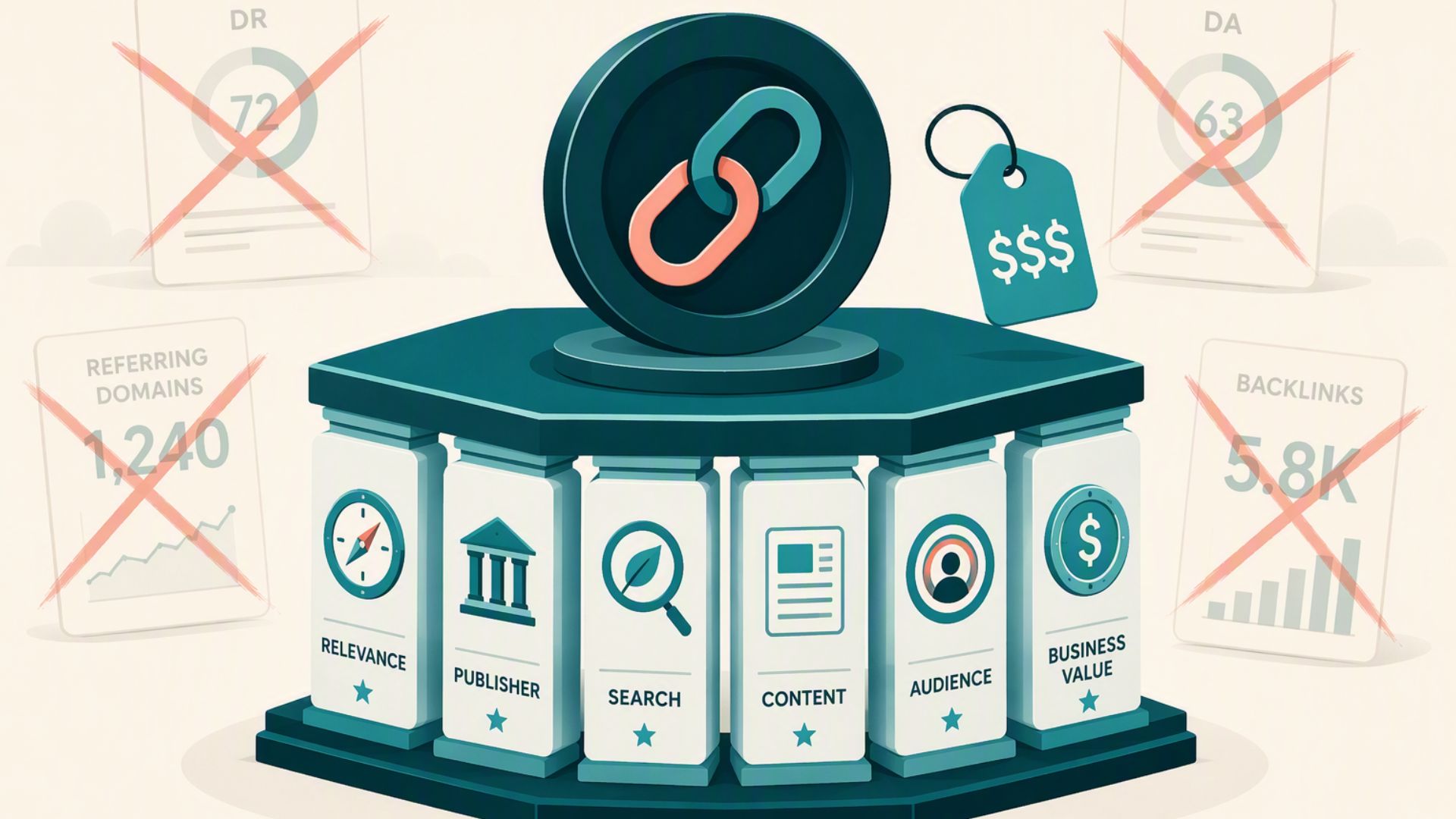

Backlinks are often treated as a numbers game: the more a website earns, the stronger its Domain Authority should become. In practice, the relationship is not that simple. A site can accumulate hundreds of links without seeing a meaningful change in its score, while a smaller number of relevant, credible references can contribute to a stronger link profile. Understanding why this happens makes it easier to evaluate link-building results and avoid chasing numbers that look impressive but add little value. This guide explains how backlinks influence Domain Authority and what actually matters when assessing them.
What Does Domain Authority Measure?
Domain Authority (DA) is a Moz metric that estimates how likely a domain is to rank in search results compared with other domains. It uses a 1–100 scale, with higher scores generally indicating greater ranking potential within Moz’s model. The score is based on multiple link-related factors, not a simple backlink count.
This distinction matters when evaluating a site’s SEO progress. DA can help compare the relative strength of competing domains, but Google doesn’t assign it, and it isn’t a direct ranking factor. Google uses its own systems to evaluate pages and links, so a change in DA should not be interpreted as a guaranteed change in search rankings.
How Backlinks Shape a Domain’s DA Score
Backlinks influence Domain Authority through the overall strength of a site’s link profile. Moz’s calculation considers link-related signals to estimate how likely a domain is to rank in search results relative to others. As a site earns stronger and more diverse references from other websites, its profile can become more competitive within that model.
However, there is no fixed exchange rate between links and DA points. Earning one backlink does not automatically raise the score by a certain amount, and adding dozens of links does not guarantee an increase. The effect depends on how the new references fit into the domain’s existing profile.
The Number of Referring Domains
The number of unique websites linking to a domain provides more context than the total backlink count alone. A site receiving 30 links from one publication has 30 backlinks but only one referring domain. Another site receiving one link from each of 30 different websites has the same number of backlinks but a much broader set of sources.
That distinction matters because a diverse set of legitimate linking domains can indicate broader recognition across the web. It is therefore more useful to examine both backlink volume and the number of unique domains behind that volume.
The Strength of the Linking Websites
The sites providing those references also matter. A link from an established website with a strong link profile can contribute more meaningful external support than numerous links from weak or low-quality sources.
This does not mean that marketers should chase websites above an arbitrary DA threshold. DA is a third-party metric, and using it as a simple pass-or-fail rule can overlook other important source characteristics, including legitimacy, relevance, and editorial context.
Relevance and Context
A reference carries more useful context when it naturally connects the source page with the destination. For example, a web hosting company receiving a link from a technology publication to a detailed server guide has a clear topical connection. A link from an unrelated site with no meaningful reason to reference that guide tells a different story.
This is also why placement matters. A contextual editorial reference that helps readers explore a related subject is fundamentally different from a link inserted solely to manipulate search signals.
Why Link Quality Matters More Than Raw Volume
The number of links can increase quickly without substantially changing the strength of a site’s profile. Repeated links from the same domains, irrelevant references, and links created through manipulative practices can inflate the count without providing the same value as legitimate references from relevant sources.
The practical takeaway is simple: you don’t build a stronger DA profile by collecting links indiscriminately. It comes from earning credible references that expand and strengthen the site’s overall network of linking domains.
Why More Backlinks Don’t Always Increase Domain Authority
A growing backlink count does not guarantee a higher Domain Authority score. The score reflects the strength of the overall link profile, so adding links that contribute little new value may have a limited effect. This is why a website can gain new references while its DA remains unchanged.
Another factor is that DA is a relative metric. Moz’s model evaluates a domain against others in its index, and the broader link landscape can change over time. As competing domains strengthen their profiles or Moz updates its data and calculations, a site’s score may move even when its backlink count hasn’t changed significantly.

The practical lesson is to avoid treating DA as a simple counter where every new link produces a predictable increase. A rising backlink total is useful context, but it doesn’t, by itself, show that the site’s position within the broader link landscape has improved.
Do Backlinks Improve Google Rankings or Just Domain Authority?
Backlinks can influence more than a third-party authority score. Google uses links in its search systems, including PageRank, to understand relationships between pages and assess their importance. This means earning a legitimate reference can boost search visibility even without a change in Domain Authority.
However, a higher DA score does not cause better Google rankings. Moz calculates DA using its own data and methodology, while Google evaluates pages using its own ranking systems and many signals beyond links. A site can therefore have a high DA without ranking well for a particular query, just as a site with a lower score can rank strongly for relevant searches.
This distinction matters when measuring SEO results. DA can help compare the relative strength of domains, but it should not be treated as evidence that Google will rank one site above another. The value of earning strong references lies in the underlying signals and visibility they can support, not simply in the number an SEO tool displays.
The next section is the FAQ section. Since the conclusion should close the article rather than introduce new information, I’d keep these answers brief and directly tied to the questions we’ve already covered.
What a Strong Backlink Profile Looks Like
A strong backlink profile is not defined by a specific number of links or a particular Domain Authority score. Instead, it reflects a pattern of genuine references from websites that have a legitimate reason to point to the content. Key characteristics include:
- Diverse referring domains: Links come from multiple websites rather than a few sources.
- Relevant sources: The linking websites and pages have a meaningful connection to the site’s subject or the content being referenced.
- Credible websites: References come from legitimate, established sources rather than sites created primarily to distribute links.
- Natural editorial context: Links appear where they provide useful information or additional context for readers, rather than being inserted solely to manipulate search signals.
No universal formula exists for building this type of profile. The appropriate sources will vary by industry and audience. The practical goal is to publish useful resources that other websites have a genuine reason to reference, allowing the profile to grow through legitimate mentions rather than artificial link accumulation.
Conclusion
Backlinks can contribute to a stronger Domain Authority score, but you can’t measure their impact by link count alone. The sources of those links, the diversity of referring domains, and the overall quality and context of the profile all matter.
More importantly, use DA as a comparative SEO metric, not a direct measure of Google ranking ability. Building a healthy profile is therefore less about collecting as many links as possible and more about earning legitimate references that strengthen the site’s presence across the web.