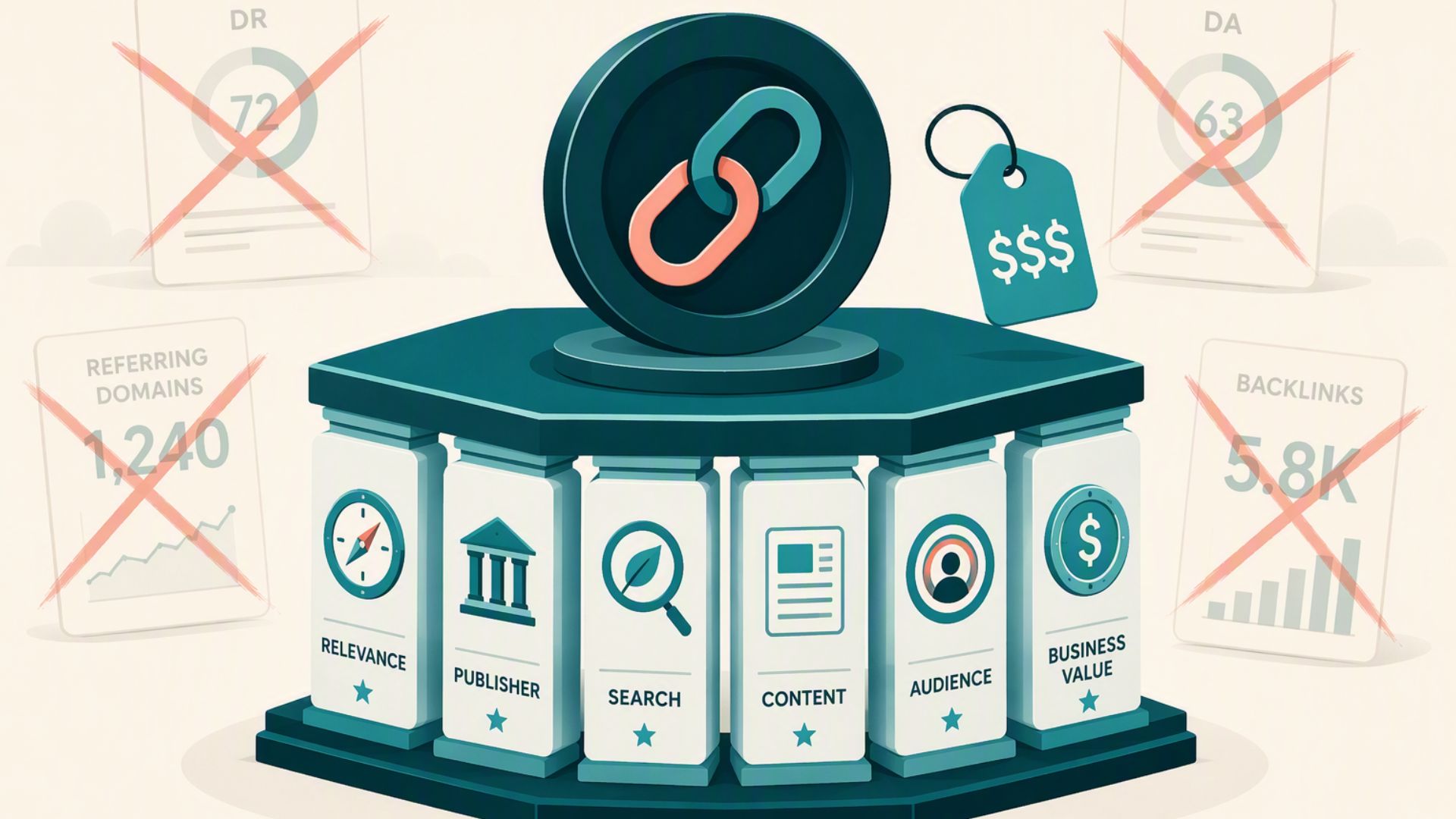

SEO tools can make a domain look easy to judge. A high Domain Rating (DR), Domain Authority (DA), or Trust Flow (TF) score may suggest a strong website, while a low score may seem like a warning sign. The problem is that these numbers do not tell the whole story. Each metric is built differently and measures specific aspects of a site’s link profile, not its overall value or guaranteed ability to rank. Understanding what these scores can and cannot tell you makes it easier to evaluate domains without relying on a single number.
What Do Domain Metrics Actually Measure?
Domain metrics are numerical estimates used to assess the strength or characteristics of a website’s backlink profile. They don’t directly measure a site’s overall SEO performance. Instead, each metric evaluates links using its own methodology and database.
That distinction matters because a score reflects only the signals included in the tool’s model. A domain may have a strong score because it has many or influential referring domains, for example, while other factors such as organic traffic, topical relevance, content quality, or the condition of individual backlinks may tell a different story.
DA, DR, and TF therefore work best as indicators rather than final judgments. They can make domain comparisons easier, but the number needs context to support a sound SEO decision.
Domain Rating (DR): What Ahrefs Measures
Domain Rating (DR) is Ahrefs’ metric for comparing the relative strength of a website’s backlink profile. It uses a 0–100 logarithmic scale, meaning that moving higher on the scale generally requires substantially more link strength than making the same numerical jump at the lower end.
DR considers the referring domains pointing to a site, the DR of those referring domains, and how many other unique domains they link to. This means the raw number of backlinks is not enough to explain a score. The strength and distribution of referring links also matter.
DR is useful for comparing backlink profiles within Ahrefs. It can help narrow down potential link prospects or provide a quick comparison between competing domains.
The score works best as a starting point. A higher DR does not automatically mean a site has better content, more relevant links, stronger organic traffic, or greater value for a specific SEO campaign.
Where DR Falls Short
DR focuses on the link-based signals included in Ahrefs’ model, so it cannot provide a complete picture of a website. It does not account for factors such as organic traffic, brand popularity, or domain age. A domain can therefore have a high DR yet still require closer review before it qualifies as a strong SEO opportunity.
Domain Authority (DA): What Moz Measures
Domain Authority (DA) is Moz’s proprietary score for estimating how likely a domain is to rank in search results compared with other domains. It uses a 0–100 scale and is calculated from Moz’s own link data and ranking model, so it should be understood as a third-party SEO metric rather than a Google score.
Moz uses its own link index and predictive modeling to produce DA. The exact formula is proprietary, so don’t interpret the score as a simple backlink count or a direct measure of Google’s ranking systems.
DA is most useful for comparing domains in the same competitive context. For example, comparing competing sites can help identify differences in their overall link-based strength within Moz’s model.
The comparison matters more than the number itself. A DA of 50 does not represent a universal level of SEO authority, nor does it mean that a domain with DA 60 will necessarily outrank one with DA 40.
Where DA Falls Short
DA cannot tell you how Google will rank a particular page. It also does not replace checks for organic traffic, topical relevance, content quality, or the actual value of the site’s backlinks. In other words, DA can help with domain research, but treating the score as a final verdict can misrepresent a site’s SEO value.
Trust Flow (TF): How Majestic Measures Link Quality
Trust Flow (TF) is Majestic’s metric for assessing the quality of links pointing to a URL or domain. It uses a 0–100 logarithmic scale and is based on how link equity flows through Majestic’s web graph. Unlike a simple backlink count, it weighs links more heavily from sites Majestic considers trustworthy.
Majestic starts with a set of trusted seed sites and analyzes how trust flows through their linking relationships. Majestic calculates TF at the URL level, then produces domain-level scores by aggregating URL-level results. Both internal and external links can affect the calculation.
TF helps assess the quality of a backlink profile, especially when used alongside Citation Flow (CF). While TF focuses on link quality, CF focuses more on link quantity and influence. Comparing the two can show whether a site’s link profile appears supported by stronger sources or a larger volume of links.
Where TF Falls Short
TF is still a proprietary SEO vendor metric, not Google’s assessment of trust or authority. Its score reflects Majestic’s web map and methodology, so it shouldn’t be treated as a direct prediction of rankings. It also works best for like-for-like comparisons. Majestic recommends comparing similar entities, such as the homepages of competing sites, rather than treating a TF number as an absolute measure of quality.
Why DA, DR, and TF Rarely Match
Seeing different DA, DR, and TF scores for the same domain is normal. These tools don’t measure the web from a single shared database. Each provider uses its own link data, calculations, and definition of what the metric represents.
Different Data
A backlink that appears on one platform may not appear on another, and the tools may also process the same links differently. Their indexes are continually updated, so scores may change as new links are discovered or existing links change.
Different Calculations
The metrics also evaluate links differently. DR focuses on the relative strength of a domain’s backlink profile, while TF uses Majestic’s model of trust flowing from manually selected seed sites. DA uses Moz’s own predictive model and link data.
Different Purposes
The numbers may look similar because all three use a 0–100 scale, but the scales are not interchangeable. A DR of 50 does not represent the same thing as a DA or TF of 50.
How Accurate Are DA, DR, and TF?
The answer depends on what you expect the number to tell you. DA, DR, and TF can accurately reflect the calculations made by their respective platforms, but that doesn’t make them accurate measures of Google’s view of a website or guaranteed predictors of rankings.
Accurate Within Their Own Models
Each score reflects the data and methodology of the tool that produces it. That makes the metrics useful for consistent comparisons within the same platform. For example, comparing two domains using DR can help show how their backlink profiles differ according to Ahrefs’ model.
Useful for Relative Comparisons
These scores are more meaningful when compared with similar sites than when judged against a fixed benchmark. Ahrefs, for example, recommends comparing DR with competitors, the wider industry, and the sites ranking for the keywords you want to target.
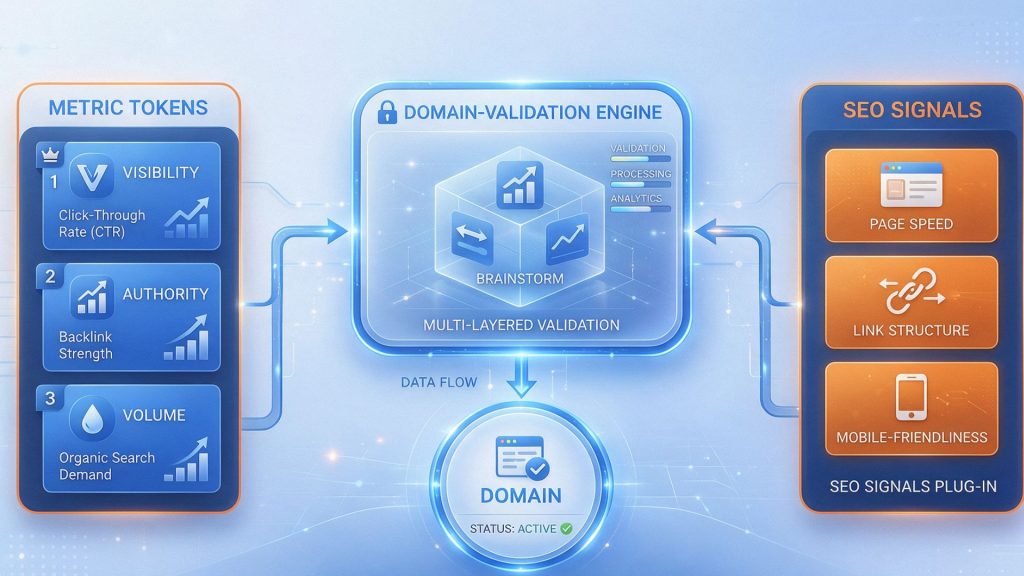
Not Direct Google Ranking Scores
None of these metrics is a Google ranking factor. Google says its ranking systems use many signals and operate largely at the page level, while PageRank remains part of its link analysis systems. Google’s documentation does not identify DA, DR, or TF as ranking signals.
Not Standalone Ranking Predictors
A relationship between a third-party metric and search performance does not mean the metric causes rankings. Ahrefs’ 2025 study found a 0.131 correlation between DR and SERP rankings, which it describes as small. That supports using DR as a competitive indicator, not as a guarantee that one domain or page will outrank another.
The Blind Spots Behind a High Domain Score
A high DA, DR, or TF score can make a domain look attractive at first glance, but the number leaves important questions unanswered. The score may describe a strong link profile within a tool’s model without showing whether those links are relevant, whether the site attracts real search traffic, or whether its pages are useful to the audience.
Organic Traffic
A strong link profile does not automatically mean a site receives substantial traffic from Google. Ahrefs itself recommends checking organic traffic when evaluating a site rather than relying on DR alone.
Topical Relevance
A link from a strong domain is not automatically useful for every subject. Majestic’s Topical Trust Flow helps analyze the topics behind incoming links, highlighting why relevance matters alongside link strength.
Backlink Quality
A score can hide differences between individual links. Where the link comes from, how relevant the source is, and how the source itself is linked to can matter more than simply counting referring domains. Majestic, for example, uses Trust Flow to distinguish link quality from the broader quantity represented by Citation Flow.
Domain and Page Differences
A domain-level score can also obscure the strength of individual pages. A website may have a strong overall profile while a particular page has few relevant external links. That is why domain-level metrics shouldn’t replace examining the page that matters for the SEO objective.
Content Quality
None of these numbers tells you whether a site’s content is accurate, useful, well-maintained, or genuinely valuable to readers. A high score can therefore be a useful reason to investigate a domain, but it is not enough reason to trust it.
Can Domain Metrics Be Manipulated?
Domain metrics can reflect link patterns that don’t necessarily represent a website’s real value. Artificial link building, paid links intended to influence rankings, excessive link exchanges, and other manipulative practices can create backlink profiles that look stronger in third-party tools than they are in practice. Google classifies several of these practices as link spam and may take action against them or otherwise neutralize their effects.
This is another reason not to treat a high DA, DR, or TF as proof of quality. A score can tell you that a domain has certain link signals, but it cannot tell you why those links exist or how Google may treat them. Checking the referring sites, relevance, traffic, and link patterns provides context the score alone cannot.
What to Check Before Trusting a DA, DR, or TF Score
A domain score helps narrow opportunities, but it shouldn’t be the final basis for evaluating a site. Before acting on a high DA, DR, or TF, check the signals behind the number:
- Organic traffic: Check whether the site attracts consistent search traffic and whether that traffic matches its purpose.
- Ranking keywords: Look at the terms bringing visitors to the site. A large keyword count means little if the rankings are mostly for irrelevant or low-value searches.
- Referring domains: Review which websites are linking to the domain, rather than focusing only on the number of referring domains.
- Backlink quality: Inspect the actual links for relevance, context, and the quality of the sites providing them.
- Topical relevance: A link from a site that covers the same subject can provide more useful context than a link from an unrelated domain with a higher score.
- Link patterns: Look for unusual concentrations of links, sudden growth, or other patterns that warrant closer investigation.
- Domain history: For an existing or expired domain, check how it has been used over time. A strong current score does not explain the site’s previous history.
- Content quality: Review the site’s actual content. Accuracy, usefulness, depth, and relevance cannot be reduced to a domain-level score.
Looking at these signals together gives a much clearer picture than treating any single metric as a shortcut for evaluating a website.
How to Use Domain Metrics Properly
DA, DR, and TF are most useful when they help narrow a decision rather than make it for you. A practical approach is to:
- Use the score as a filter: Start with DA, DR, or TF to narrow a large list of potential domains or link prospects.
- Compare like with like: Compare similar websites using the same metric. A score becomes more useful when you have a relevant benchmark.
- Review the backlink profile: Check the referring domains and individual links behind the score instead of accepting the number at face value.
- Validate traffic and rankings: Look at organic traffic and ranking keywords to see whether the site’s link strength is reflected in actual search visibility.
- Check topical relevance: Consider whether the site’s subject and backlinks match the topic or audience you are targeting.
- Investigate unusual patterns: Large changes in link growth, questionable referring sites, or a mismatch between a high score and weak search performance deserve closer inspection.
- Use multiple signals: Combine domain metrics with backlink quality, traffic, rankings, content, relevance, and domain history before making an SEO decision.
The goal is not to find the domain with the biggest number. Use the number as one piece of evidence, then verify whether the underlying site supports what the metric suggests.
Conclusion
DA, DR, and TF can speed up domain research, but none provides a complete picture of a website. Each score reflects a specific third-party model and its underlying link data, so differences between them are expected.
Use these metrics to identify patterns and make comparisons, then look beyond the number. Organic traffic, relevant backlinks, rankings, content quality, and domain history provide the context needed to determine whether a domain is genuinely valuable for the purpose being considered.