
A website may mention a company, product, or service without linking to the source. While that mention does not count as a backlink, it can create a valuable opportunity to earn one because the publisher has already chosen to reference the brand. Instead of starting a new link-building campaign from scratch, businesses can identify these unlinked references and approach the publisher with a relevant link request. The key is knowing which mentions are worth pursuing and how to make the request useful to both the publisher and its readers.
What Is an Unlinked Brand Mention?
An unlinked brand mention is a reference to a company, product, service, or person on another website without a hyperlink to the relevant source. For example, an industry article may name a company while discussing a product it offers but leave the name as plain text.
That is different from a backlink, where the mention is clickable and points to a page on the referenced website. The distinction matters because an unlinked mention does not give the site a link to benefit from, but it can provide a natural reason to request one.
Not every mention should be pursued. The strongest opportunities are those where a link would give readers an easy way to access useful information related to the reference.
The next section should focus on qualification, because not every mention is worth pursuing. This is also where we can make the article more useful than a generic “find mentions and email them” guide.
Which Unlinked Mentions Are Worth Converting?
Finding an unlinked mention is only the first step. Before contacting a publisher, assess whether adding a link would actually make the page more useful to its readers. A strong opportunity usually has a clear connection between the mention, the surrounding content, and a relevant page on your website.
The mention is relevant to your website
Start with the context in which the company, product, or service appears. A mention in an article that directly discusses the same industry, problem, product category, or subject is more useful than a passing reference on an unrelated website.
The closer the connection, the easier it is to explain why a link would help readers explore the subject further.
The mention provides a natural reason to link
A link should add something to the page rather than exist simply to create a backlink. For example, if an article names a company’s research study, linking to the original study gives readers a way to review the source. If a product is mentioned while explaining how it works, a link to the relevant product page may provide useful additional information.
This makes the request easier to justify because the proposed link serves a clear purpose.
The page is worth earning a link from
Look beyond the website’s overall authority. The quality and relevance of the specific page containing the mention matter more than a single third-party metric.
Consider whether the page is:
- Relevant to the subject
- Well-written and maintained
- Published by a credible source
- Receiving meaningful search or referral traffic
- Likely to remain useful to its audience
Metrics such as Domain Rating or Domain Authority can help with prospecting, but they should not be the only reason to pursue a mention.
The mention is positive or neutral
The context surrounding the reference matters. A positive or neutral mention may provide a reasonable basis for a link request, while negative coverage, complaints, or sensitive reporting may not be appropriate for this type of outreach.
The goal is not to turn every reference into a link. The goal is to identify situations where a link makes sense editorially.
A useful destination page exists
Before contacting the publisher, identify the page you would want them to link to. It should directly support the article’s information, not just send readers to the homepage.
A relevant guide, product page, original research, case study, or other useful resource can give the publisher a stronger reason to add the link.
When an unlinked mention should be left alone
Some opportunities are better left untouched. An unrelated website, low-quality page, spam-filled publication, or mention with no useful destination does not become valuable simply because the brand appears on it.
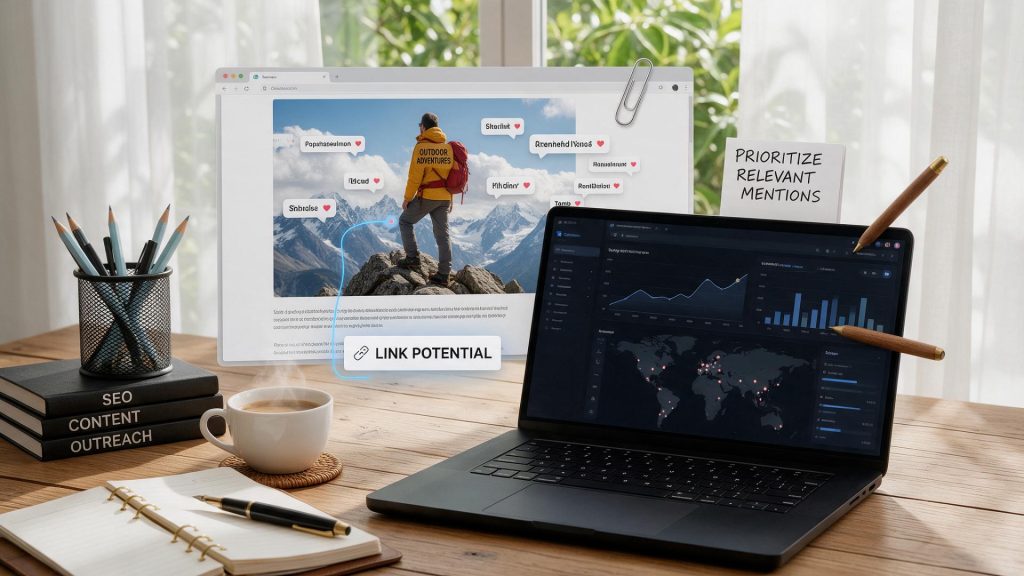
If adding a link would feel forced, the publisher probably has little reason to add one. In those cases, keeping the existing mention without pursuing a backlink is often the better decision.
How to Find Unlinked Brand Mentions
Start by searching for your company name, products, services, founders, original research, and other distinctive terms associated with the brand. Google search operators can narrow the results, such as placing the name in quotation marks and excluding your own domain with -site:yourdomain.com. This helps surface pages that reference the brand without relying on a single tool or database.
For larger websites, SEO and brand-monitoring tools can make discovery faster by finding mentions across a wider range of pages. Tools such as Ahrefs and Semrush can help identify potential opportunities, while monitoring services can alert you when new references appear. Regardless of the method, treat the results as prospects to review rather than confirmed link opportunities; each mention still needs manual review before outreach.
Verify the Mention Before Requesting a Link
Search results can include outdated pages, duplicate references, or mentions that already link to you. Open the page and locate the exact reference, then check whether the brand name or relevant phrase already points to your website. Also confirm that the page is live, accessible, and actually discusses the subject connected to your brand.
Next, check whether the mention has a suitable page to link to. If the article discusses a specific product, study, or resource, identify the page that provides the most useful information for readers. If there is no natural destination or the existing reference does not provide a reasonable basis for a link, remove the prospect from the outreach list rather than forcing the opportunity.
Choose the Right Page and Link Placement
The best link request points to the page that gives readers the most useful follow-up information. A company mention may justify a link to the homepage, but a specific product, research study, case study, or detailed guide is often a better destination when it directly relates to the surrounding content.
Link placement matters as well. The link should fit naturally where the brand or resource is discussed rather than being added in an unrelated part of the page. You also don’t need to dictate keyword-rich anchor text; the publisher can use wording that fits the article naturally. The goal is to make the link useful to readers, not to make the placement look SEO-engineered.
How to Request a Link From the Publisher
Once you’ve verified the mention and have a suitable destination page, contact the person most likely to manage the content, such as the author, editor, or website owner. Keep the message specific: identify the article, note the existing reference, and suggest the relevant page readers can visit for more information. Explain the link’s usefulness rather than its SEO value.
Keep the outreach short and personalized to the page. Avoid generic messages that could apply to any website, and do not make the publisher feel obligated to add the link. A simple request that clearly connects the existing reference to the proposed resource is usually more appropriate than a long explanation of backlinks or search rankings.
What Happens After You Request the Link?
Give the publisher reasonable time to respond before following up. If you don’t get a response, one concise follow-up is usually enough. Repeated messages are unlikely to improve the opportunity and can make the outreach intrusive.
If the publisher adds the link, check that it points to the intended page and fits naturally within the content. If the request is declined or the publisher doesn’t respond, leave it there and move on to other prospects. An unlinked mention can still provide brand exposure and referral potential even when it does not become a backlink.
Mistakes That Reduce Unlinked Mention Conversions
A poorly chosen prospect or overly aggressive request can make a straightforward link opportunity harder to convert. Avoiding a few common mistakes keeps the process focused and makes the outreach more useful to publishers.
- Requesting a link from every mention. Not every reference has enough relevance or context to justify a link.
- Relying only on authority metrics. A high Domain Rating or Domain Authority does not make an irrelevant page a good prospect.
- Asking for the wrong destination. Sending readers to the homepage when a specific guide, product page, or study is more useful weakens the request.
- Forcing keyword-rich anchor text. The link should fit naturally into the publisher’s existing content.
- Sending generic outreach. Publishers are more likely to understand a request when it clearly references their article and the existing mention.
- Following up repeatedly. One reasonable follow-up is preferable to sending multiple messages after no response.
- Trying to turn every mention into a backlink. Some references add visibility or credibility even when they remain unlinked.
- Paying for a link simply because the site mentioned the brand. The opportunity should come from a legitimate editorial reason for linking, not from manipulating search rankings.
Make Unlinked Mention Conversion an Ongoing Process
Unlinked mentions can appear whenever a company is referenced in new articles, reviews, research, or industry content, so the process should not end after one outreach campaign. Set up a practical way to monitor new references and review them periodically, rather than searching manually whenever a link opportunity arises.
A simple workflow is monitor → find → verify → qualify → choose the destination → contact the publisher → follow up → record the outcome. Over time, this makes unlinked mention conversion a repeatable part of link-building work, not a one-time campaign. The same process also helps prioritize worthwhile opportunities while filtering out mentions that do not justify outreach.
Conclusion
Unlinked brand mentions can provide a practical source of backlink opportunities because the publisher has already chosen to reference the brand. The key is to be selective: verify the mention, assess whether a link would help readers, choose the most relevant destination, and make a concise request. When handled this way, converting existing mentions becomes a focused link-building activity rather than a numbers game.