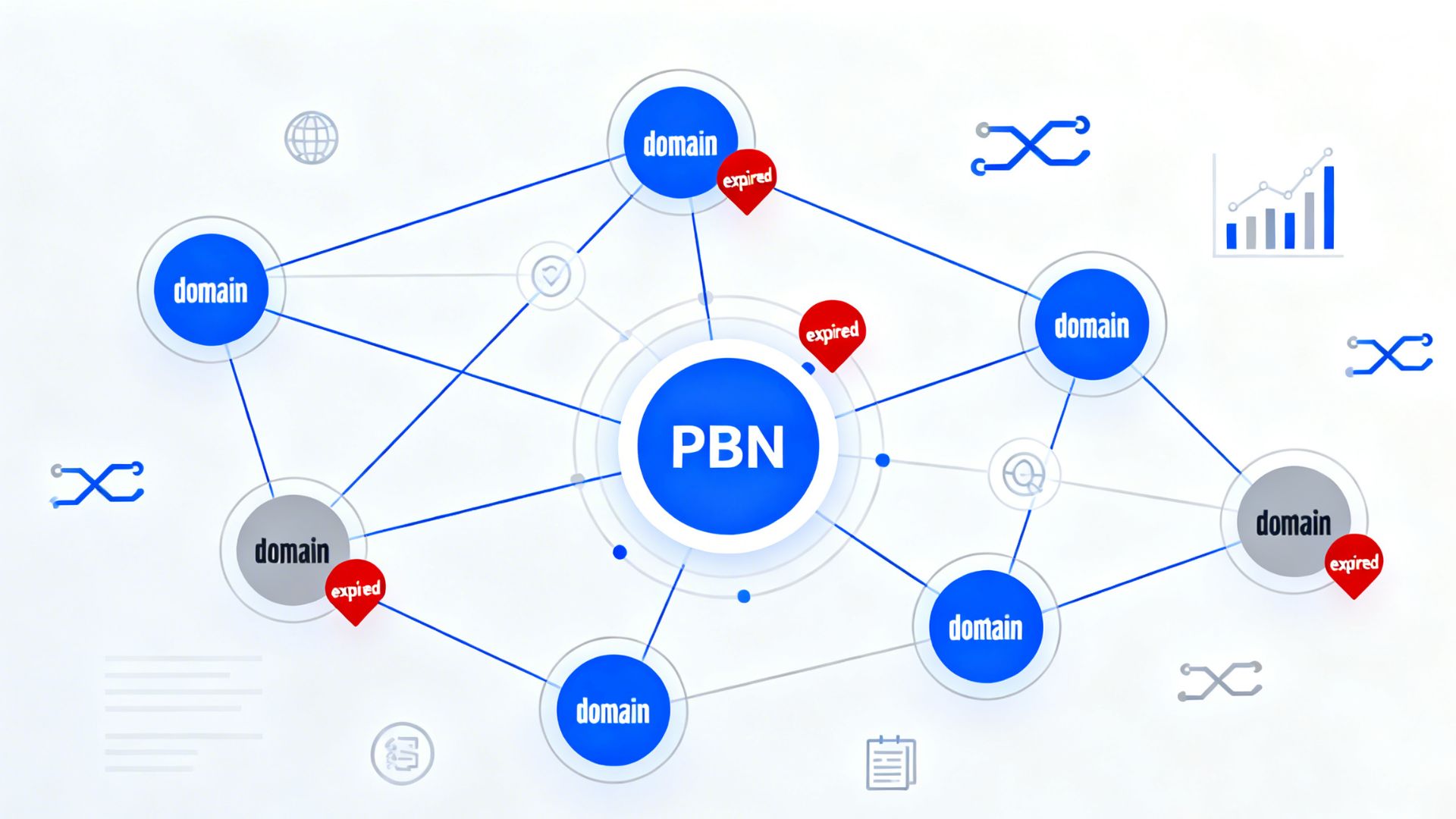

An expired domain is a previously registered web address that becomes available again after the owner fails to renew it. While expiration may sound like a simple administrative lapse, these domains often retain historical signals such as backlinks, age, and past visibility that can influence search performance.
For SEO practitioners and digital investors, expired domains can offer a faster starting point than registering a brand-new name, provided they are carefully evaluated. This article explains what expired domains are, how the expiration process works, what SEO value may transfer, and which risks must be assessed before acquisition.
What Exactly Is an Expired Domain?
A domain expires when its registration term ends and the owner does not complete renewal within the allowed timeframe. Most domains are registered on annual terms, although longer registrations are possible. Expiration can occur for many reasons, including abandoned projects, business closures, budget constraints, or simply overlooked renewal notices. Once a domain completes the expiration and deletion process defined by registrars and registries, it becomes publicly available for re-registration.
Buying an expired domain is legal and follows the same registration rules as purchasing a new domain, provided the name does not infringe on trademarks or intellectual property rights. The defining difference between an expired domain and a newly registered one lies in history. A new domain starts with no backlinks, no content record, and no trust signals, while an expired domain may carry historical metrics such as inbound links, indexed pages, or brand mentions. These inherited signals make expired domains attractive for SEO, but they also require careful evaluation to ensure the domain’s past use does not introduce legal or technical risks.
The Complete Expired Domain Lifecycle
When a domain is not renewed, it does not immediately become available to the public. Instead, it passes through a structured lifecycle defined by registrars and domain registries. On the expiration date, the domain status changes, and associated services like websites and email often stop functioning.
The domain then enters a grace period during which the original owner can renew it at the standard price. If no action is taken, the domain progresses into a redemption phase, where recovery is still possible but typically involves higher fees. After redemption ends, the domain moves into a short pending deletion stage during which no changes or renewals are allowed. Once this phase concludes, the domain is deleted from the registry and released back into the public pool, where it can be registered by anyone or captured by drop-catching services.
SEO Value of Expired Domains: What Actually Transfers?
Expired domains can retain SEO value, but only certain signals persist after re-registration. One of the most significant assets is backlinks. If authoritative websites continue linking to the domain, those links may still pass value once the domain is rebuilt or redirected. This can positively influence metrics such as Domain Authority or Domain Rating, depending on link quality.

Domain age is another indirect advantage. While search engines do not rank sites based on age alone, older domains with consistent historical use often experience smoother indexing and faster trust development than newly registered domains. In some cases, expired domains may also retain residual referral traffic from existing links or brand mentions.
However, these benefits are conditional. Search engines evaluate relevance, link quality, and usage patterns, meaning expired domains only offer value when their history aligns with the new project.
Risks and Red Flags to Avoid
Not all expired domains are beneficial. Some carry negative histories that can undermine SEO performance. Domains previously associated with spam, malware, manipulative link schemes, or deceptive content may still be affected by algorithmic filters or manual actions.
Topical mismatch is another concern. If a domain’s backlinks come from unrelated industries, the authority they pass may be limited or diluted. Domains that show patterns of artificial link building, such as networks of low-quality sites or excessive keyword-stuffed anchors, can also pose long-term risks.
To mitigate these issues, buyers rely on backlink analysis tools, historical archives, and spam detection services to identify red flags before purchasing.
How to Buy and Use Expired Domains Profitably
Expired domains are typically sourced through public databases, auction platforms, or drop-catching services that attempt to register domains the moment they are released. Before acquisition, a thorough audit is essential. This includes reviewing backlink quality, anchor text patterns, historical content, and index status.
Once acquired, expired domains can be used in several ways. Some site owners rebuild the domain with fresh content in the same niche to preserve relevance. Others redirect the domain to an existing site to consolidate link equity, though this must be done carefully to avoid relevance issues. Regardless of the strategy, post-purchase cleanup, such as removing toxic links or updating content, is often necessary.
Expired Domain vs. New Domain
Compared to new domains, expired domains can offer faster initial momentum due to inherited signals, but they also come with a higher risk. New domains provide a clean slate with minimal downside but typically require more time and effort to build authority.
Expired domains are best suited for competitive niches or projects where speed matters, while new domains remain ideal for brand-first or long-term initiatives where control and consistency are priorities.
Conclusion
Expired domains can serve as powerful SEO assets by providing access to existing backlinks, age signals, and historical trust that new domains lack. However, these advantages only materialize when the domain’s past use aligns with its future purpose. Without careful evaluation, expired domains can introduce penalties, irrelevant authority, or technical challenges. By understanding the expiration lifecycle, auditing historical signals, and matching domains to appropriate use cases, site owners and investors can leverage expired domains effectively while minimizing risk.