
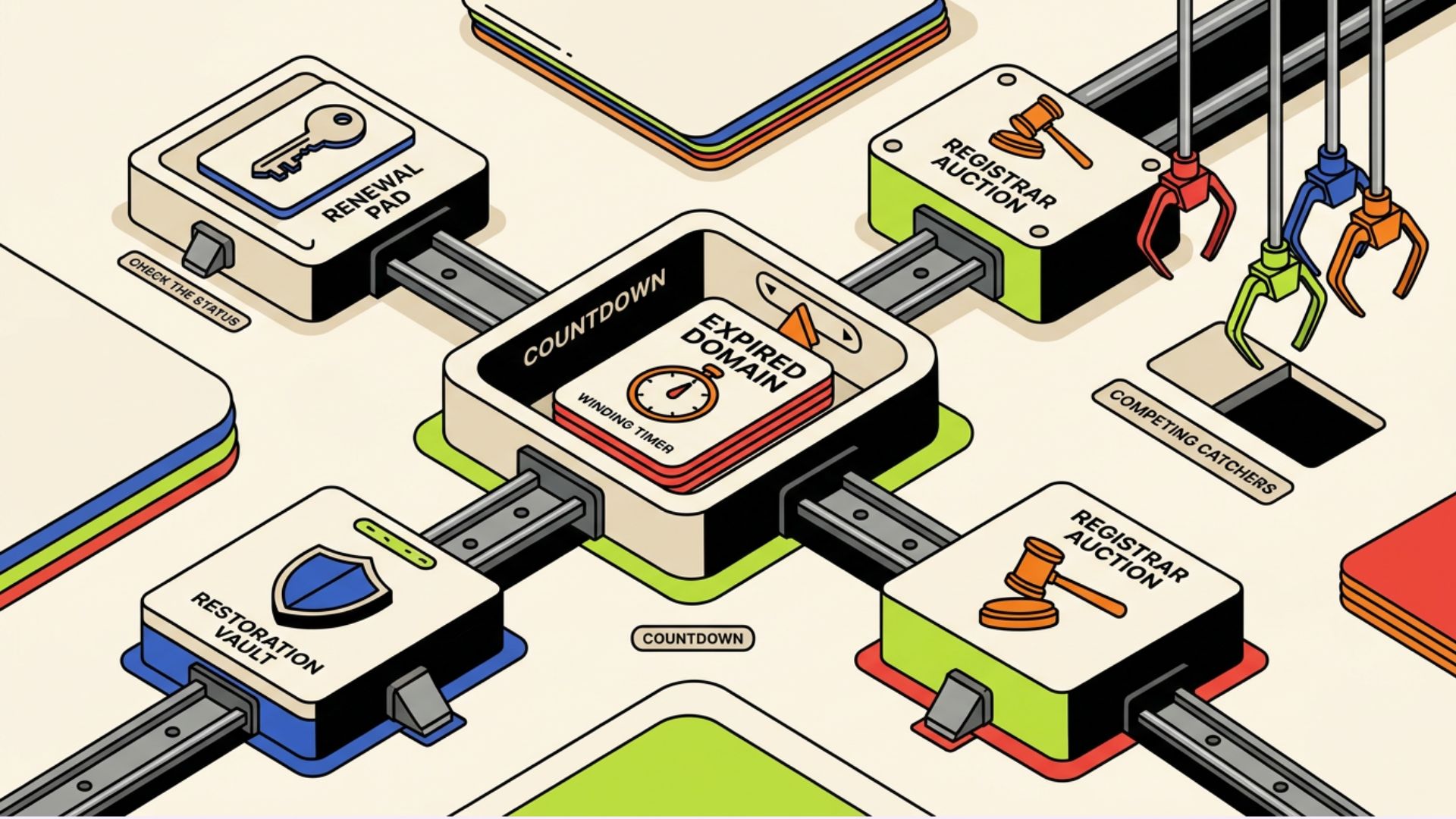
A valuable web address can attract attention long before it becomes available. When its registration expires, however, it does not usually become open for anyone to register immediately. It may pass through several stages, and competing buyers may be waiting for the same opportunity. This is where domain drop catching comes in. Specialized services attempt to secure an expired name as soon as it is released for registration. Understanding how the process works can help buyers set realistic expectations, choose the right approach, and avoid missing a valuable opportunity.
Understanding Domain Drop Catching?
Domain drop catching is the practice of registering an expired domain name as soon as it becomes available again. The key point is that expiration alone does not make a name available for registration. Depending on the registrar, registry, and top-level domain, it may first go through several post-expiration and deletion stages.
Once the registration is released, specialized drop-catching services use automated systems to submit registration requests immediately. The goal is to secure the name before competing services or buyers do.
Drop catching does not guarantee success. Highly valuable or desirable names often attract multiple simultaneous registration attempts, making the process competitive.
How Does Domain Drop Catching Work?
The process begins long before a name becomes available again. An expired domain registration usually moves through several stages, and drop catching only occurs if it eventually reaches the point where the registry releases it for a new registration.
1. The Domain Registration Expires
When a registration reaches its expiration date, the name does not usually become immediately available to the public. The original registrant may still have an opportunity to renew it, depending on the registrar’s policies and the applicable rules for that extension.
2. The Domain May Go Through Post-Expiration and Deletion Stages
If the registration is not renewed, it may move through additional stages before it can be released. Depending on the registrar, registry, and top-level domain, this process can include a grace period, deletion, a redemption period, and Pending Delete.
The exact timeline varies. This is why an expiration date alone does not reliably indicate when a name will become available.
3. The Domain Is Released or “Drops”
If the name completes the applicable deletion process and is not renewed or restored, the registry can release it for registration again. This is known as the drop. At this point, the name may become available to anyone who submits a successful registration request.
4. Drop-Catching Services Compete to Register It
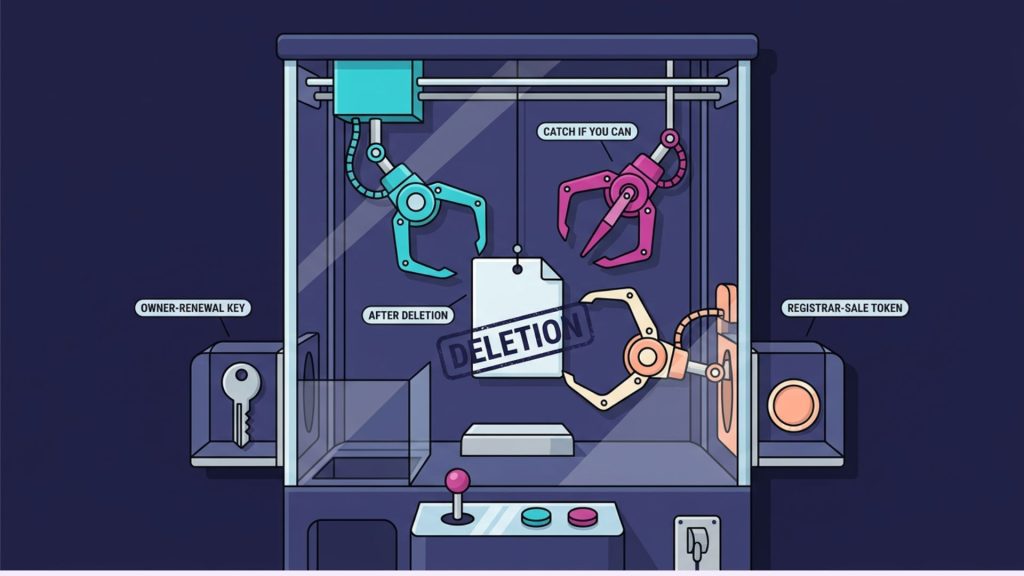
Drop-catching services monitor names approaching release and use automated systems to submit registration requests as soon as they become available. For highly desirable names, several services may attempt to register them nearly simultaneously.
This gives specialized services an advantage over manually checking a registrar’s search page and then registering the name once it appears available.
5. The Successful Catch Is Assigned or Auctioned
What happens next depends on the service’s policies. If only one customer requested the name through the successful provider, that customer may be able to acquire it directly. If multiple customers place orders for the same name, the service may place it up for auction.
Either way, placing a backorder does not guarantee success. Another service may win the registration attempt, or competition among interested buyers may increase the final cost.
Why an Expired Domain May Never Reach the Drop
An expiration date does not guarantee that a name will eventually become available for drop catching. Before it reaches that point, several things can happen:
- The original registrant renews it: The owner may renew the registration after the expiration date, depending on the applicable renewal period and registrar policies.
- The name is restored: If it enters an applicable redemption period after deletion, the original registrant may still restore it.
- The registrar sells or auctions it: Some registrars sell or auction certain expired names before they enter the registry’s deletion process. In this case, the registration can change hands without becoming publicly available.
- The TLD follows a different lifecycle: Expiration, deletion, and release rules can vary across top-level domains and registries.
For this reason, it is better to monitor the registration’s actual status rather than relying only on its listed expiration date.
Domain Drop Catching vs. Domain Backordering
Domain drop catching and backordering are closely related, but they are not the same thing.
A domain backorder is a request placed with a provider to acquire a specific domain name if it becomes available. Domain drop catching is the actual process of attempting to register that name when it is released.
| Domain Backordering | Domain Drop Catching |
| A customer places a request for a specific name | A service attempts to register the name when it becomes available |
| Happens before the name is released | Happens when the name drops |
| Does not guarantee ownership | Success depends on whether the service catches the name |
In simple terms, a backorder gives a drop-catching service instructions to try to acquire the customer’s name. However, placing a backorder does not guarantee success. The original owner may renew it, the name may never reach the drop, or another service may successfully register it first.
How to Use a Domain Drop-Catching Service
Using a drop-catching service is more than placing an order and waiting for the name to become available. The process usually starts with tracking the registration, checking whether it is likely to reach the drop, and understanding what happens if other buyers are interested.
Find the Name You Want to Acquire
Start by identifying the name you want to catch. This may be an expired registration with branding value, existing traffic, or a history that makes it worth acquiring.
However, an expiration date alone does not mean it will become available. The current status provides a better indication of its place in the lifecycle.
Check Its Current Status
Check the registration status to determine whether it has expired, entered redemption, or reached Pending Delete. This helps you understand whether it is still recoverable by the original registrant or moving closer to being released.
Keep in mind that status codes and timelines can vary depending on the top-level domain, registry, and registrar.
Research the Name Before Trying to Catch It
Before placing a backorder or entering an auction, check whether the name is actually worth acquiring. Review its previous use, backlink profile, reputation, and any history of spam or abuse.
It is also important to check for potential trademark issues. An expired registration can become available again, but that does not give a new registrant the right to use a name in a way that infringes on an existing trademark.
Choose a Drop-Catching or Backorder Service
Different providers may support different extensions and use different systems to compete for released names. Before choosing one, check:
- Supported top-level domains
- Backorder or catch fees
- Auction rules
- What happens if multiple customers request the same name
- Refund or payment policies if the catch attempt fails
Understanding these rules in advance can prevent unexpected costs or confusion later.
Place a Backorder and Monitor the Process
Once you choose a provider, place a backorder for the name you want. The service will then attempt to register it if it reaches the public drop.
Continue monitoring its status. The original registrant may renew it, the registrar may sell or auction it before deletion, or the name may follow a different lifecycle than expected.
Be Prepared for Competition
If the name is valuable, other buyers may also be trying to acquire it. Even if your chosen service successfully catches it, you may still need to compete in an auction when multiple customers request the same registration through that provider.
A backorder gives the service permission to try on your behalf, but it does not guarantee that you will ultimately acquire the name.
What Happens If Multiple People Want the Same Domain?
Competition can occur at two levels during domain drop-catching.
First, multiple drop-catching services may attempt to register the same name as soon as it becomes available. Each service uses its own registrar network and systems, and only one can successfully secure the registration first.
Competition can also occur within the service that catches it. If several customers placed a backorder for the same name through the successful provider, the name may be placed into an auction. The final winner is then determined according to that provider’s auction rules.
This means that successfully catching a name does not always mean the person who placed the first backorder automatically receives it. Depending on the service, other interested customers may also have an opportunity to bid.
For highly desirable names, it is important to understand both the backorder process and the provider’s auction rules before placing an order.
Conclusion
Domain drop catching is a way to try to acquire a previously registered name when it is released after completing the applicable expiration and deletion process. However, an expiration date alone does not mean the name will become available. It may be renewed, restored, sold, or auctioned before reaching the public drop.
For names that do become available, competition can be significant. Understanding the registration lifecycle, checking the current status, researching the name beforehand, and knowing how a provider handles backorders and auctions can help you make better decisions and set realistic expectations.