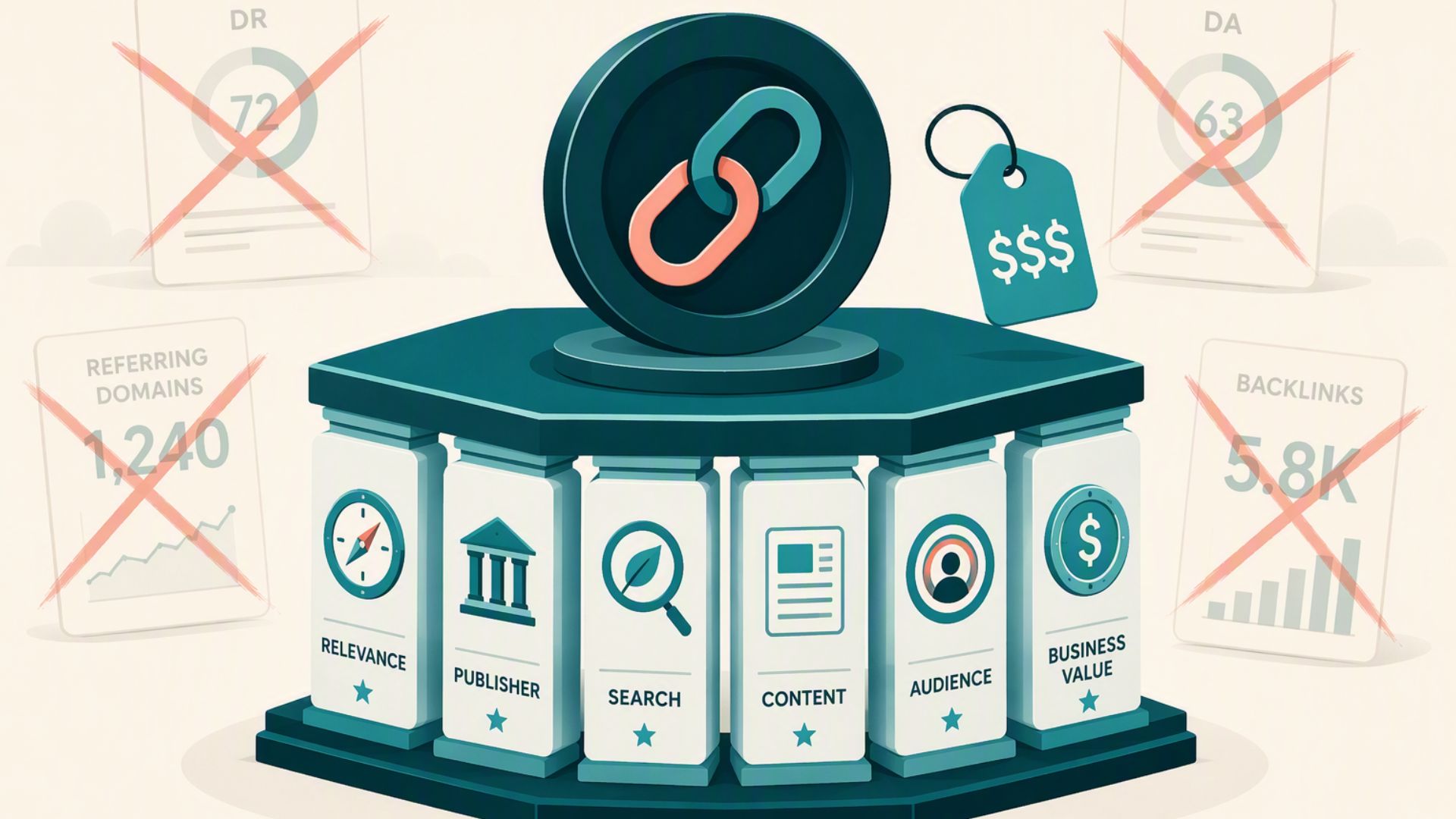

When evaluating a domain, a large backlink count does not necessarily mean the link profile is strong. Some domains attract links from trusted sources, while others accumulate links that offer little meaningful value. Majestic’s Trust Flow and Citation Flow provide two different ways to examine these signals. Understanding what each score represents, how they relate, and what they can reveal about a domain’s backlink profile can help buyers investigate a domain before making a purchase. This guide explains how these Majestic metrics work and how to interpret them in the context of domain evaluation.
What Are Trust Flow and Citation Flow?
Majestic’s Flow Metrics come from its web link map and show how websites compare within the portion of the web it has crawled and indexed. Trust and Citation Flow use the same 0–100 scale, but they examine different characteristics of a link graph.
Trust Flow: A Quality Signal
Trust Flow is Majestic’s 0–100 measure of the quality associated with links pointing to a URL or domain. Majestic calculates it using a set of trusted seed sites that it manually reviewed. Pages connected more closely to those trusted sources can receive stronger values.
Don’t treat the scale as a percentage. A score of 40, for example, does not mean that 40% of a site’s links are trusted. Majestic also notes that increases become harder at higher levels, so the difference between two numbers is not necessarily proportional.
For a buyer, the useful question is therefore not simply whether the number is high. It is what kinds of linking sources contribute to it.
Citation Flow: A Link Influence Signal
Citation Flow measures the popularity or influence associated with links in Majestic’s link graph. It also uses a 0–100 scale and is calculated at both URL and domain levels. Majestic explains that the measure predicts a URL’s influence based on the sites linking to it, with links carrying different weights.
This makes it useful for understanding the broader strength of a site’s linking network. However, a higher figure does not mean the underlying sources are relevant, trustworthy, or appropriate for the project you plan to build.
That distinction is why the two measures are most useful together, not as standalone judgments.
Trust Flow vs. Citation Flow: How the Two Metrics Differ
Trust Flow provides context about the trust associated with links, while Citation Flow reflects a URL’s potential influence based on its link graph. Looking at both can reveal patterns that one score alone would miss.
| Trust Flow | Citation Flow | |
| Main perspective | Trust and link quality | Link influence and popularity |
| Scale | 0–100 | 0–100 |
| Primary purpose | Assess trust signals within the link graph | Estimate the influence associated with links |
| Useful for buyers | Investigating the strength of trusted links | Understanding the broader link influence of a domain |
| Best interpreted with | Citation Flow and backlink data | Trust Flow and backlink data |
The distinction becomes important when two domains have similar-looking link profiles on the surface. One may have links that contribute stronger trust signals, while another may have greater link influence without the same level of trust. The scores can therefore point a buyer toward different areas of the backlink profile that deserve investigation.
Neither metric should be treated as the “good” or “bad” score. They measure different dimensions, and they work together. Buyers get more useful information by considering the relationship between Trust and Citation Flow, then examining the backlinks that support those figures.
How Should Domain Buyers Read Trust Flow and Citation Flow Together?
The relationship between the two scores can tell you where to investigate next. However, don’t treat it as an automatic pass-or-fail test.
When the Scores Are Close
When the two figures are relatively close, the quality and influence signals Majestic represents are more closely aligned. That can be useful when comparing similar sites, but it does not confirm that the links are relevant or valuable.
The next step is to inspect the sources producing those figures. A balanced relationship can still come from links that have little connection to the domain’s intended purpose.
When Citation Flow Is Much Higher
A large gap means the domain has stronger link-influence signals than quality signals within Majestic’s system. That does not automatically make the domain unsuitable, but it gives the buyer a reason to investigate.
Look at the referring sites, individual backlinks, anchor text, and surrounding context. The scores can show that something deserves attention; the underlying data explains what it is.
When Both Scores Are Low
Low figures generally indicate limited signals within Majestic’s index. That is not automatically a problem. A small website or a domain with a modest linking network can naturally produce lower numbers.
The better question is whether the existing links have meaningful relevance or value for the intended project. A buyer looking at a smaller business domain should not apply the same expectations used for a major publisher or large platform.
Majestic itself advises treating these measures as part of a wider link analysis rather than drawing conclusions from the numbers alone.
What Does the TF:CF Ratio Actually Tell You?
The TF:CF ratio compares Trust with Citation Flow by dividing the former by the latter. SEO practitioners and domain traders sometimes use the relationship as a quick screening measure when assessing a backlink profile.
It can be useful, but it shouldn’t be the decision itself.
Why Buyers Use the Ratio
The calculation puts the two scores into a single relationship. For example, a domain with values of 20 and 25 presents a different balance from one with values of 5 and 40. That difference can help prioritize further investigation. A wide gap may indicate that the broader linking network deserves more scrutiny, particularly when the buyer is considering the domain for its existing link equity.
Majestic also notes that SEOs and domain traders use the difference between the two figures as an indicator that can prompt investigation into potentially low-quality links.

Is There a Good TF:CF Ratio?
No universal ratio guarantees a valuable acquisition. Some SEO practitioners use preferred thresholds as screening rules, but these are conventions rather than an official Majestic quality grade. Majestic recommends using its measures for like-for-like comparisons and considering additional data points rather than relying on one figure.
The ratio is therefore best treated as a diagnostic signal. If the relationship looks unusual, investigate the sources rather than automatically accepting or rejecting the domain.
What the Ratio Cannot Explain
A ratio only describes the relationship between two aggregate figures. It cannot show which referring sites generated them, whether those sources are topically relevant, or how the link network changed over time. Answering those questions requires a closer look at the underlying data.
What Should a Domain Buyer Check Behind the Numbers?
The headline figures are only the starting point. Majestic’s Site Explorer provides additional information on referring domains, backlinks, topical categories, and historical trends that can help explain what is behind them.
Referring Domains and Backlinks
Start with the actual sources. Look at which websites link to the domain, how those sites relate to it, and whether the links make sense in context. A high aggregate figure deserves more scrutiny if it depends on sources that appear unrelated, repetitive, or otherwise questionable.
Majestic’s tools let users move from summary figures to referring domains and individual inbound links, rather than stopping at the headline numbers.
Topical Trust Flow
Topical Trust Flow adds another layer by showing the relative influence associated with a URL, subdomain, or root domain across different subject categories. For a potential acquisition, this can answer a practical question: Does the existing link network make sense for what the domain will be used for?
A strong overall score does not automatically make a domain a good fit if its strongest topical signals have little connection to the planned project.
Backlink and Flow Metric History
A current snapshot can hide how a domain reached its present position. Majestic’s Backlink History shows how many links its crawlers have found to a domain over time, while Flow Metric History allows users to examine changes in Trust Flow and Citation Flow across multiple years.
This historical view can reveal whether the profile has been relatively stable or has undergone significant changes. Majestic also notes that its underlying algorithms can be refined over time, making long-term trends more useful than focusing too heavily on a single point in time.
Domain History
The site’s previous use provides additional context. If a domain has changed industries, changed ownership, or accumulated links during a very different period of its history, view the current figures alongside that background. The goal isn’t to assume an old domain is valuable because it has existing authority, but to understand whether its history supports the reason for acquiring it.
What Trust Flow and Citation Flow Can’t Tell You
These measures help analyze a link network, but they don’t provide a complete picture of a domain’s SEO or commercial value.
They Do Not Show Organic Traffic
A strong Majestic profile does not tell you how many visitors the site receives from search engines. Traffic requires separate evidence from analytics, search-performance data, or other reliable sources.
They Do Not Predict Google Rankings
Trust Flow and Citation Flow are third-party metrics created by Majestic. They can help analyze links, but they do not determine whether Google will rank a domain or a future site.
The distinction matters when evaluating an acquisition: a strong third-party score is evidence about a link profile, not a promise of future search visibility.
They Do Not Validate Every Link
An aggregate score cannot tell you that every referring site is relevant or useful. You still need to review individual sources for context, topical fit, and history.
They Do Not Establish a Domain’s Value
A numerical score cannot determine whether the asking price is reasonable or whether the name is commercially useful. Traffic, rankings, brand considerations, history, relevance, and the intended use all matter.
For expired domains in particular, Google warns against purchasing an expired domain name primarily to manipulate search rankings with low-value content. Google classifies that practice as expired domain abuse.
How to Use Trust Flow and Citation Flow Before Buying a Domain
Use the figures as the beginning of the review, not the conclusion.
- Record both scores: Start with the two headline figures to establish a baseline.
- Compare their relationship: Note whether one is substantially higher than the other, but do not treat the difference as an automatic verdict.
- Inspect referring domains and backlinks: Find the sources behind the numbers and assess their relevance and context.
- Review topical signals: Check whether the subjects associated with the linking network fit the site’s intended purpose.
- Check historical changes: Review backlink development and changes in the two scores rather than relying only on the current snapshot.
- Validate with independent evidence: Consider organic traffic, search visibility, previous use, commercial relevance, and the reason for acquiring the name.
The objective is simple: understand why the domain has its current figures before deciding what those figures are worth to the project.
Conclusion
Trust Flow and Citation Flow give domain buyers useful insight into different sides of a backlink profile. Trust Flow helps assess trust signals, while Citation Flow provides context around link influence. Reading them together can reveal patterns worth investigating, but neither score should determine a purchase on its own. The stronger approach is to examine the backlinks, referring domains, topical relevance, and historical data behind the numbers, then validate those findings against the domain’s traffic, history, and intended use.