
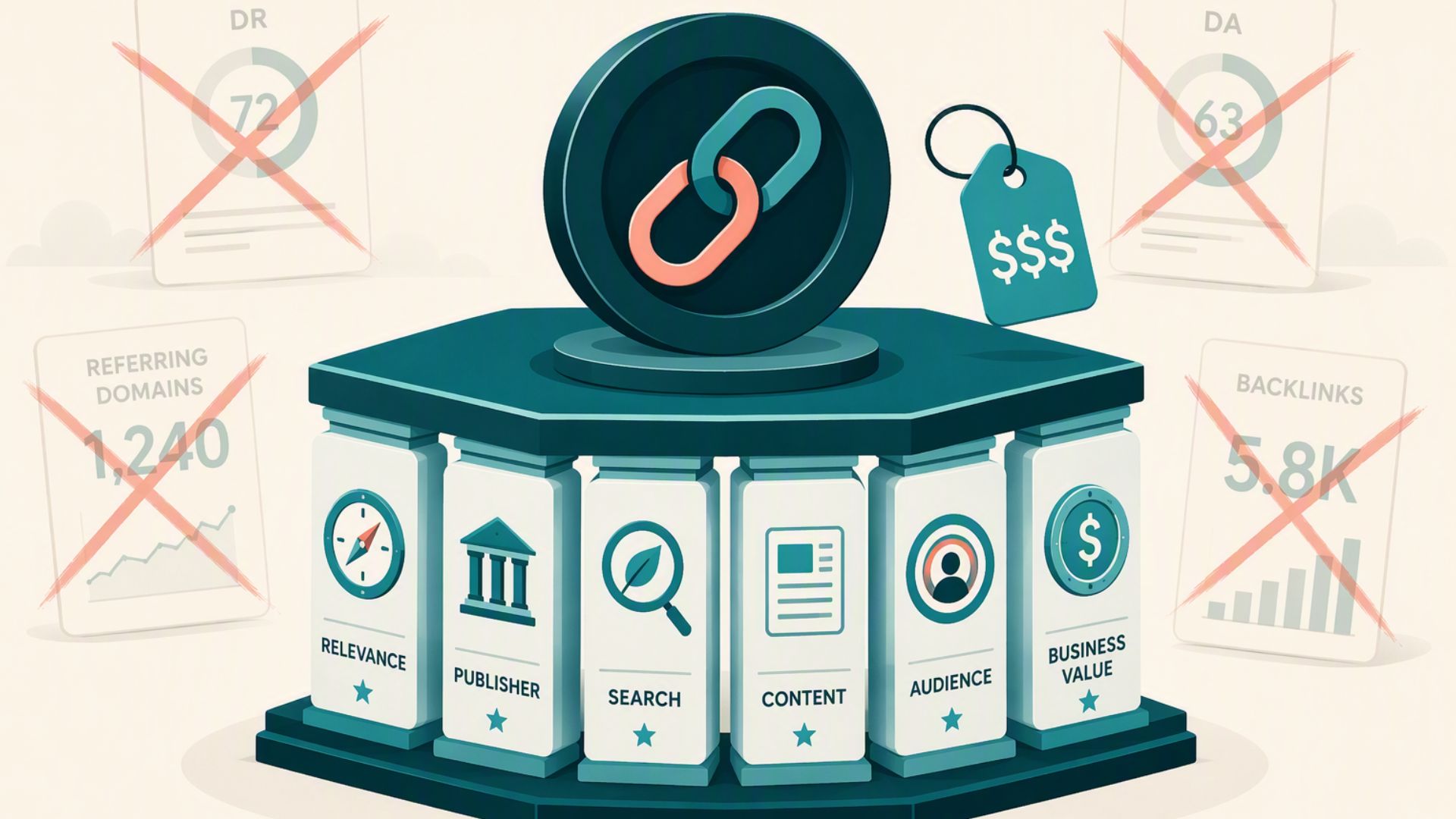
A $300 link can look like a bargain when the site has a high Domain Rating and thousands of monthly visitors. But those numbers alone do not tell you what you are actually buying. The page may have little search visibility, attract the wrong audience, or already contain dozens of paid placements. A cheaper offer can have the same problem in reverse: a low price does not make a weak placement a good deal. Before paying, examine the site, the specific page, the placement, and its potential value, then compare those findings with the asking price.
Start With What You’re Actually Buying
Before comparing the price with a site’s DR or traffic, find out exactly what you’re paying for. A paid backlink may be included in a new article, added to an existing page, or placed alongside several other commercial links. These options can provide very different levels of value.
Ask for the exact page where the link will appear, how it will be included, what link attributes will be used, and how long it will remain. Also check whether the price includes content creation or only the link. Knowing these details first gives you a clear basis for judging the offer instead of relying on a single SEO metric.
Evaluate the Opportunity Before Looking at the Price
Don’t judge an offer by its price or headline metrics first. Check the site, page, and audience to understand what the link can realistically provide.
1. Relevance to the Business and Audience
Check whether the website and its audience are relevant to the business. Then review the specific article where the link will appear and the page it will point to.
The connection should be useful to readers. For example, a cybersecurity company can reasonably earn a link from an article about protecting business networks. A link from an unrelated site may have strong SEO metrics, but the lack of relevance weakens its practical value.
2. Quality and Search Visibility of the Publisher
Review the site’s organic visibility, relevant ranking keywords, referring domains, and overall link profile. Metrics such as Domain Rating, Domain Authority, and Authority Score can help with this initial assessment, but they are third-party measurements rather than definitive measures of value.
A high score means little if the site has weak relevant search visibility or an unconvincing link profile. Look at what supports the metrics before treating them as evidence that the offer is worth more.
3. Quality of the Actual Linking Page
Evaluate the exact page where the link will appear rather than assuming the entire domain has equal value. Check whether the page is indexed, receives relevant search visibility, covers a related topic, and contains useful content.
Also review its existing external links. A page crowded with unrelated commercial links may indicate that it is being used primarily to sell links. The proposed mention should also fit naturally within the article rather than being added simply to accommodate a paid link.
4. Potential Business Value Beyond SEO
Consider whether the link can provide value outside search rankings. A relevant site with an established audience may send referral traffic, introduce the business to potential customers, or support brand visibility.
Look at who actually reads the site and whether those people have a reason to click. A link that can reach a relevant audience has a more tangible business case than one whose only selling point is an SEO metric.
Assess the Asking Price
There is no fixed market price for a backlink. Two websites with similar authority metrics can charge very different amounts because their relevance, audience, search visibility, editorial standards, and terms may differ.
Treat the asking price as a starting point, not proof of value. Compare the offer with similar opportunities and consider what the site and specific page can realistically provide. A higher price may be reasonable when the opportunity offers strong relevance, visibility, and audience value. A lower price can still be poor value if the site provides little useful exposure or has significant quality concerns.
Compare the Price Against the Evidence
Once you have assessed the site, page, audience, and terms, compare those findings with the asking price. The goal is not to find a universally correct price, but to determine whether the offer is reasonable for what it provides.
Compare it with similar opportunities, not unrelated offers. A $500 link from a relevant publication with strong search visibility should not be measured against a $50 link from a low-visibility site. Look at comparable sites, similar audiences, and the same type of link before deciding whether the price difference is justified.

Also consider what you can realistically gain. If the site has relevant readers, the page has search visibility, and the link can bring qualified referral traffic, those benefits add context to the price. If the offer relies mainly on a high DR or DA score without comparable evidence of value, the price deserves more scrutiny.
When a Backlink Is Not Worth Paying For
Some offers are difficult to justify even when the seller presents strong SEO metrics. The problem may become clear once you compare those numbers with the actual site, page, audience, and terms.
Irrelevant Website or Audience
If the site has little connection to the business or its target audience, the link has limited practical value. A high DR does not fix a weak topical fit.
Strong Metrics but Weak Search Visibility
A site can have a high DR or DA while attracting little relevant organic traffic. If its authority is the main reason for the price, verify what supports that metric before paying.
Poor or Overloaded Linking Page
Be cautious when the proposed page is thin, receives little search visibility, or contains numerous unrelated commercial links. The domain may look strong, but the page offers little value.
Guaranteed Ranking Results
Promises of specific ranking improvements are a warning sign. Search rankings depend on many factors, so no seller can reliably guarantee that one paid link will produce a particular position.
The Price Is Based on One Metric
If the seller’s main justification is DR, DA, or traffic, ask what else the offer includes. A price should reflect the overall opportunity, not a single third-party metric.
The Arrangement Creates Search-Policy Risk
Google considers buying or selling links to manipulate search rankings to be link spam. Paid links used for advertising or sponsorship should be appropriately qualified, such as with rel=”sponsored” or nofollow.
What to Check Before You Approve the Purchase
Before paying, confirm the offer against the evidence you have gathered. You should know exactly where the link will appear, why the site and page are relevant, and what you can realistically gain from the placement.
Check that:
- The site and linking page are relevant to the business.
- The publisher has genuine search visibility, not just strong third-party metrics.
- The page provides useful content and is not overloaded with commercial links.
- The link fits naturally within the content.
- The site’s audience is relevant enough to provide potential referral traffic.
- The seller has clearly explained the price, terms, and expected duration.
- The link attributes are clear, particularly if the placement is paid.
- The asking price is supported by the opportunity’s overall quality, not a single SEO metric.
- The arrangement does not rely on practices intended to manipulate search rankings.
If several of these points are unclear, the offer needs more investigation before any money changes hands.
Conclusion
You can’t determine a backlink’s value by DR, DA, traffic, or price alone. What matters is the quality of the opportunity behind those numbers: the site’s relevance, search visibility, linking page, audience, placement, and potential business value.
Before paying, compare those factors with similar offers and look for evidence that supports the asking price. If the seller cannot show why the opportunity is valuable beyond a single SEO metric, the price may not be justified. A careful evaluation helps ensure the money goes toward a useful marketing opportunity rather than an impressive number on a report.