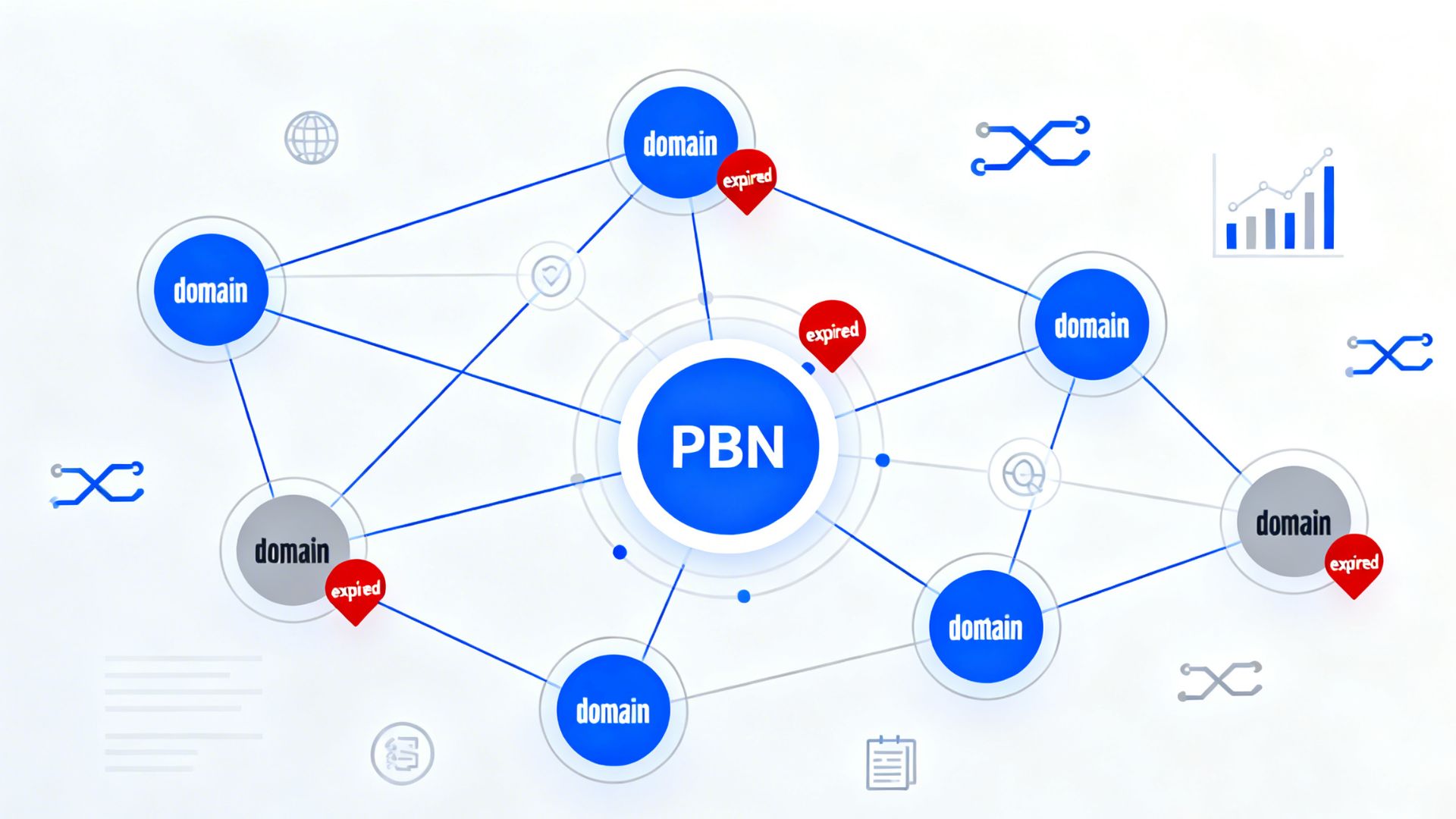

Private Blog Networks rely on authority, trust, and link equity to influence rankings. Expired domains provide a shortcut by inheriting existing backlinks, domain age, and established authority signals. When properly vetted, they can accelerate rankings because they already hold indexed pages and referral equity. This advantage only applies if the domain maintains a clean link profile and relevant historical use.
Without proper screening, an expired domain can carry penalties or toxic backlinks that undermine the entire network. This article explains how to source, evaluate, integrate, and maintain expired domains within PBNs using structured and objective processes.
Why Expired Domains Excel in PBNs
Expired domains outperform new registrations because they retain measurable authority metrics such as Domain Authority and referring domain counts. When a domain previously earned backlinks from legitimate publications or niche blogs, those links may continue passing equity after restoration. Homepage backlinks are particularly influential because they distribute authority across internal pages once the site is rebuilt.
Topical relevance strengthens this effect. Search engines evaluate link context and subject alignment, so a domain historically focused on fitness will transfer stronger signals to related fitness properties. Aged domains also carry behavioral signals, including residual type-in traffic or returning visitors, which may support crawl frequency and index stability.
Trust is another important factor. Older domains that have maintained consistent ownership and content themes often appear more credible in algorithmic evaluation. While age alone does not guarantee rankings, age combined with authoritative backlinks can create a compounding effect that accelerates visibility within competitive niches.
Vetting Expired Domains Thoroughly
Thorough evaluation protects a PBN from future penalties. Start by examining authority metrics such as Domain Authority above 30 and a Spam Score below 3 percent. Trust Flow and Citation Flow should remain balanced, ideally above 10, with no extreme disparity between the two. A heavily skewed ratio may indicate artificial link inflation.
Next, analyze backlink composition. At least half of the referring domains should point to the homepage, and a majority of links should be contextual rather than sidebar or footer placements. Contextual links embedded within relevant content tend to carry stronger signals and lower spam risk.
Historical review is essential. Archive snapshots should confirm that the site previously hosted legitimate content rather than adult, pharmaceutical, or foreign-language spam. Anchor text distribution should appear natural, with branded anchors forming the majority and minimal exact match keyword anchors. Combining metric analysis with manual inspection reduces the probability of inheriting toxic signals.
Acquisition and Pricing Strategies
Expired domains can be acquired through closeout auctions, backorder platforms, or direct drops. Pricing generally ranges from 10 to 200 dollars depending on authority metrics and traffic levels, although premium domains can exceed this range. Recent expirations often preserve more link equity because backlinks remain live and less likely to be removed.
Keyword-based searches help identify niche-relevant domains. For example, scanning for formerly active blogs within a specific vertical increases the chance of topical alignment. Some practitioners test potential equity by temporarily redirecting the domain to a test property before fully integrating it.
Budget discipline is important when scaling. Instead of overpaying for a single high-metric domain, diversifying across several mid-range domains can distribute risk. Tracking cost per referring domain and cost per authority metric point enables data-driven acquisition decisions rather than emotional bidding.
Integration into PBN Networks
Rebuilding expired domains requires structural consistency with historical content themes. Using archived layouts as references can help recreate topical continuity while publishing fresh, original articles. A common benchmark involves launching each domain with 30 to 50 well-written posts before placing outbound links.
Hosting diversity reduces detectable patterns. Placing domains on separate C-class IP ranges and different hosting providers minimizes network footprints. Content management systems, themes, and plugin stacks should vary to prevent uniform technical signatures.
Link placement must be gradual. Adding one or two contextual outbound links per month reflects natural publishing behavior. Drip-feeding links and maintaining balanced internal linking structures help the domain appear like a legitimate standalone site rather than a link conduit.

Footprint Avoidance Best Practices
Network detection often arises from repetitive structures. Each PBN site should differ in page count, design layout, author profiles, and publishing schedules. A realistic range of 30 to 100 pages per site introduces organic variability.
Avoid interlinking domains within the same network. Cross-linking creates detectable patterns that search engines can map algorithmically. Instead, link outward to reputable authority sites within the niche to establish credibility signals and balanced outbound link ratios.
Anchor text distribution should remain diversified. A typical model allocates approximately 60 percent branded anchors, 30 percent partial match phrases, and 10 percent exact match terms. Randomizing publication intervals and link placement depth further reduces systematic footprints.
Long-Term Maintenance
Maintenance preserves authority over time. Quarterly content updates that add roughly 20 percent new articles per year help maintain crawl frequency and perceived freshness. Updating older posts with revised data can also extend ranking stability.
Backlink monitoring tools identify lost or toxic links. If spam backlinks appear, disavow files can mitigate potential damage before algorithmic penalties occur. Monitoring traffic trends and index status ensures early detection of deindexation risks.
Portfolio rotation is another safeguard. Replacing approximately 10 percent of domains annually spreads risk and prevents stagnation. Continuous performance tracking through analytics platforms allows data-based adjustments rather than reactive changes.
Potential Pitfalls and Fixes
Toxic backlink profiles represent the most common failure point. Reviewing spam indicators through trusted link intelligence platforms before purchase reduces exposure to manipulated link schemes. If a domain reveals excessive foreign-language anchors or gambling links, it is typically safer to abandon acquisition.
Overlinking can dilute network value. Limiting outbound links from each PBN domain to a small percentage of the overall portfolio prevents over-optimization. Excessive linking to a single money site increases detection probability.
Hosting patterns also pose risks. Using identical name servers, themes, or analytics codes across domains creates technical footprints. Offshore or geographically diverse hosting combined with varied technical configurations reduces correlation signals and strengthens network resilience.
Conclusion
Expired domains can significantly enhance PBN effectiveness when selected and managed with disciplined evaluation. Their inherited authority, backlinks, and age signals provide measurable advantages over newly registered domains. Success depends on rigorous vetting, diversified integration, and continuous monitoring.
By applying structured acquisition criteria and maintaining operational variation, PBN operators can reduce risk while leveraging existing link equity. Sustainable scaling requires methodical oversight rather than aggressive expansion, ensuring long-term ranking durability amid evolving search algorithms.