
The cryptocurrency industry sits in one of the most competitive SEO environments on the internet. Established exchanges, media outlets, and blockchain projects have spent years accumulating backlinks and authority, making it genuinely difficult for newer sites to break into the first page of search results for high-value keywords. One strategy that experienced SEOs have turned to is acquiring aged crypto domains: previously registered web addresses with a history in the blockchain or digital currency space that carry residual SEO equity from their past life.
An aged domain is not simply an old domain. The distinction matters. A continuously active domain, consistently used for a single topic, and naturally accumulated links over several years is fundamentally different from a domain that was registered once and then abandoned. In the crypto niche specifically, where trust signals and topical authority carry enormous weight, understanding what separates a genuinely valuable aged domain from a low-quality one can be the difference between a strategic asset and a costly mistake.
Why Domain Age Alone Is Not Enough
Many buyers assume that the older a domain is, the more SEO value it carries. Age can be one factor search engines consider when assessing trust, but it functions more as a supporting signal than a standalone ranking advantage. Those who buy high DR domains with genuine historical activity get far more SEO leverage than those who simply chase age alone. A domain registered in 2010 that sat dormant for most of its existence, changed topics multiple times, or accumulated spammy backlinks will perform no better than a brand new domain in most cases.
What matters alongside age is the continuity of that age. Specifically, whether the domain maintained an active and consistent web presence over its lifetime. Tools like the Wayback Machine at Archive.org allow buyers to trace a domain’s history snapshot by snapshot, checking whether it hosted a legitimate crypto-related website for years or whether it cycled through unrelated niches. A domain that spent time as a cryptocurrency news outlet before becoming a gambling site is a liability, not an asset.
Google has also become more sophisticated about detecting domains acquired purely to manipulate rankings. A 2024 algorithm update specifically targeted the practice of buying expired domains and repurposing them with thin content designed to exploit their inherited authority. Aged crypto domains that will hold up to scrutiny are those with authentic histories and a logical connection to the content you plan to publish on them.
The practical takeaway is simple: verify the full historical record before making any purchase. A domain with five years of real crypto content, clean transitions, and no penalty history is worth far more than one that is twice as old but twice as messy. When auditing a domain’s age credibility, check for the following:
- Continuous registration history with no gaps that suggest the domain was dropped and re-registered
- Consistent topic across Wayback Machine snapshots with no unexplained pivots into unrelated niches
- Active indexed pages on Google, confirming the domain is recognized as a live property
- No manual penalty signals such as sudden traffic collapse or mass deindexing events
Reading Backlink Profiles in the Crypto Niche
Backlinks are the core currency of an aged domain’s value. For a crypto-focused site, the quality of those backlinks carries an additional layer of complexity because the crypto niche has historically attracted significant link spam, scam projects, and low-quality publication networks. Evaluating an aged crypto domain’s backlink profile requires looking beyond headline metrics and examining the actual sources.
Domain Rating (DR) is a metric developed by Ahrefs that scores the strength of a website’s backlink profile on a scale from 0 to 100. A domain with a DR of 50 or higher typically has a strong collection of referring domains pointing to it, though the number alone says nothing about relevance or cleanliness. You want that rating to be built on links from recognizable industry publications, established blockchain news platforms, major technology outlets, or reputable financial media, rather than from link farms or expired domain networks.
Diversity among referring domains is another critical signal. Understanding the difference between referring domains and backlinks helps explain why diversity matters more than volume. A domain with 500 backlinks all coming from 5 websites looks far weaker to search engines than a domain with 200 backlinks spread across 150 distinct referring domains. The latter profile suggests that real editors at multiple independent sites found the content link-worthy over time, which is precisely the type of organic authority Google rewards.
Anchor text distribution deserves careful attention. A natural backlink profile contains a mix of branded anchors, naked URLs, partial match phrases, and generic text like “read more” or “source.” If the majority of a domain’s inbound anchors use exact-match keyword phrases such as “best Bitcoin exchange” or “crypto wallet review,” that pattern suggests an artificial link-building campaign at some point in its history. Exact-match anchor text saturation is a flag worth investigating further before committing to a purchase. A strong crypto backlink profile typically shows:
- Links from crypto-specific media such as CoinDesk, Decrypt, or The Block
- Diverse referring domains spanning news outlets, forums, research sites, and industry directories
- Varied anchor text with no single phrase dominating more than 20 to 25 percent of inbound links
- No sudden link spikes that indicate purchased link packages rather than organic editorial mentions
Topical Relevance and Why It Protects Your Investment
Search engines evaluate domains not just by their links but by the thematic consistency of their history. A domain that has spent years covering decentralized finance, blockchain technology, or cryptocurrency markets carries topical authority in those areas. When you redirect or rebuild a site on such a domain, the relevance signals transfer meaningfully because a domain’s history directly shapes its SEO standing in Google’s view.
Topical relevance also protects the site from one of the most common pitfalls in aged domain acquisitions: the niche mismatch redirect. Pointing a domain with a long crypto history to a completely unrelated business in an attempt to pass its link authority has become increasingly ineffective and risky. Google’s systems are built to detect when a domain has pivoted sharply in topic, and such pivots can result in the inherited authority being discounted entirely.
For practical purposes, the strongest aged crypto domains are those whose content history aligns closely with the category you plan to target. A domain that formerly ran as a DeFi news outlet is a far better foundation for a new DeFi platform than a generic technology blog that occasionally mentioned Bitcoin. The closer the historical subject matter matches your current intent, the more of the domain’s original authority carries forward in a usable way. Strong topical alignment between a domain’s history and your new site looks like:
- Same crypto subcategory (e.g., DeFi to DeFi, NFT to NFT) rather than just the same broad industry
- Backlinks anchored to relevant keywords that match your target content themes
- Wayback Machine content showing editorial depth and not just thin affiliate or landing pages
- No hard pivots into gambling, adult content, or unrelated financial products at any point in the domain’s history
Technical Red Flags That Serious Buyers Check First
Beyond backlinks and history, several technical factors can either validate or undermine an aged domain’s value. The first check many experienced buyers perform is a Google index test: simply searching “site:domain.com” to see whether Google still has pages from the domain in its index. An indexed domain signals that it has not been penalized or deindexed, meaning search engines still consider it a trustworthy web property.
Manual penalties are a significant concern in the crypto space because many domains in this niche have at some point been part of aggressive monetization schemes, link-selling networks, or content farms. Google Search Console can reveal manual actions, but since buyers typically cannot access a seller’s console, they need to infer penalty risk from secondary signals: a sudden and sustained drop in organic traffic visible through tools like Ahrefs or SEMrush, a loss of indexed pages, or a sharp spike followed by a crash in the domain’s referring domain count.

Traffic history is worth examining even when it shows a decline. A domain that once received consistent organic traffic and then dropped to near zero is more concerning than one that never attracted significant traffic but maintained a clean, stable backlink profile over the years. The former may have been penalized; the latter may simply have been a small niche site that gained genuine links without ever scaling.
Checking for any association with spam-heavy top-level domains in the referring domain list rounds out the technical audit. Links coming in from .ru, .cn, or other TLDs heavily associated with spam campaigns can trigger distrust signals, particularly in post-2024 Google evaluations where link quality is assessed at a finer level of granularity than in previous years. A clean technical profile generally includes:
- Indexed pages visible via a site: search in Google
- Stable or gradually declining traffic rather than a sudden cliff-drop
- No manual actions inferred from traffic and index data
- Referring domains free of spam-heavy TLDs and adult or gambling associations
How Pricing Reflects Real Versus Inflated Value
The aged domain market does not operate with standardized pricing. Two domains with identical DR scores and similar age can carry vastly different price tags, and the gap between them often reflects either legitimate quality differences or seller opportunism. Understanding what drives genuine value helps avoid overpaying for metrics that look good on paper but do not translate to actual SEO performance.
Domains with backlinks from high-authority news publications, major crypto exchanges, or industry-recognized research platforms command higher prices for good reason. Those links are effectively impossible to replicate through outreach because the editorial standards at those publications make new placements rare and expensive. The scarcity of those links is what gives the domain lasting value.
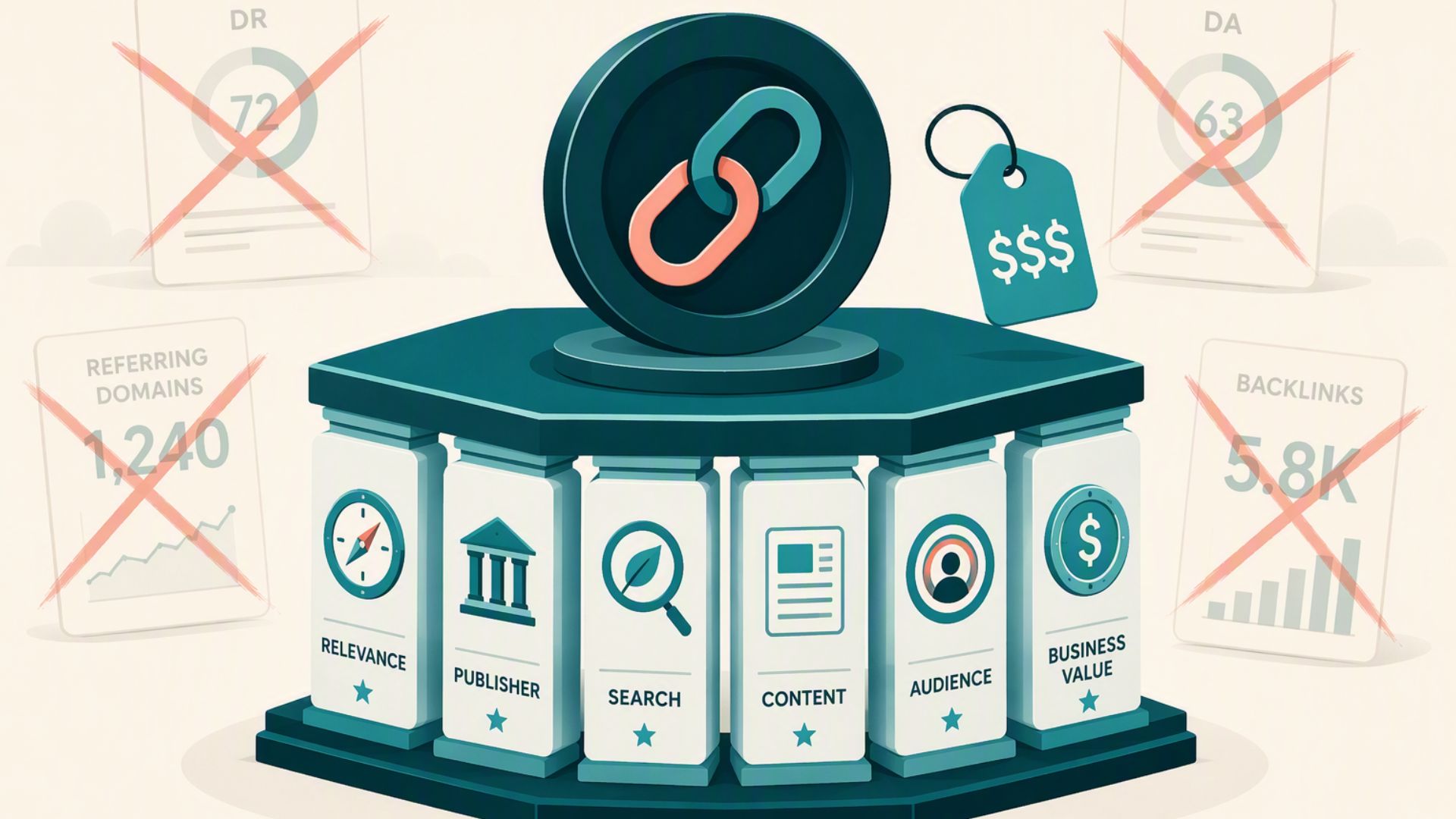
Conversely, domains priced high purely because of a strong DR metric but without vetted referring domain quality are frequently overpriced. DR inflates when domains receive many links from other high-DR sites, even if those linking sites are themselves part of link exchange networks. A focused analysis of the actual referring domains, checking each source for traffic, editorial credibility, and topical alignment, will reveal whether the headline metric reflects real authority or manufactured scores. When assessing whether a price is justified, weigh these factors:
- Link scarcity (unobtainable editorial links from major publications carry lasting premium value)
- Organic traffic history visible in Ahrefs or SEMrush, confirming the domain once ranked for real queries
- Referring domain count vs. quality (50 high-traffic editorial domains outweigh 500 low-traffic directories)
- Niche relevance premium (crypto-specific domains command higher prices than generic tech domains with similar DR)
Making the Most of an Aged Crypto Domain After Acquisition
Acquiring a quality aged domain is the beginning of a strategy, not the end of one. The way the domain is used after purchase has a significant impact on whether the inherited SEO equity is preserved, amplified, or squandered. Publishing high-quality, topically consistent content from launch is the single most reliable way to signal to search engines that the domain’s legacy authority is being continued under responsible stewardship.
Maintaining the topical continuity already established by the domain’s history is particularly important in the first several months. Search engines reassess domains when they detect ownership changes and content shifts, and a dramatic pivot in subject matter can trigger a re-evaluation period where rankings temporarily soften. Sites that pick up organically from where the previous version left off, covering the same crypto subcategory with fresh and substantive content, tend to recover and build faster than those that introduce abrupt changes.
Internal linking structure and site architecture also matter. A newly launched site on an aged domain benefits from building a logical content hierarchy that reinforces the topical clusters already associated with the domain in Google’s understanding. Over time, this approach compounds the inherited authority with freshly earned signals, creating a foundation that is significantly stronger than what either approach alone could achieve. To protect and grow the domain’s inherited SEO value post-acquisition:
- Publish content in the same topical category as the domain’s historical focus from day one
- Rebuild key pages that previously attracted strong backlinks, giving those inbound links a live destination
- Develop a logical internal linking structure that signals topical depth to search engines
- Avoid drastic site redesigns in the early months that could disrupt crawl patterns and re-indexing
The Lasting Advantage of Starting With Proven Authority
Building SEO authority from scratch in the cryptocurrency space is a multi-year undertaking. The combination of fierce competition, skeptical link editors, and Google’s elevated trust requirements for financial and investment-adjacent content means that new domains face steep odds. Aged crypto domains with clean histories, verified backlink quality, and authentic topical relevance compress that timeline in a meaningful and defensible way.
The investment makes sense when the due diligence is done properly. Every hour spent verifying backlink sources, tracing domain history, and confirming index status before purchase is time well spent, because the cost of acquiring a problematic domain, in money, time, and lost momentum, far exceeds the cost of being thorough upfront. The best opportunities in this market go to buyers who know exactly what they are looking for and evaluate each domain against a clear set of standards rather than relying on headline metrics alone.